Steering wheel vibration that appears above 55 mph sends most drivers straight to a tire shop for rebalance. Sometimes that fixes it. Often it does not — because the shake frequency and speed range tell us which rotating mass or joint is actually responsible. At vascularisq, we follow a structured isolation process before authorizing any repair.
Reading the Vibration Signature
Vibration present only under acceleration often implicates CV joints or driveline angles. Shake that changes when braking suggests warped rotors transferring through the steering column. Constant shake at a specific speed range — especially after recent tire work — points to balance, uniformity, or hub runout.
Note whether the vibration transfers through the seat and floor or isolates to the steering wheel. Body vibration with minimal steering input frequently originates at the rear — tire, axle, or driveline — even when the client describes it as a steering problem.
Tire and Wheel Fundamentals
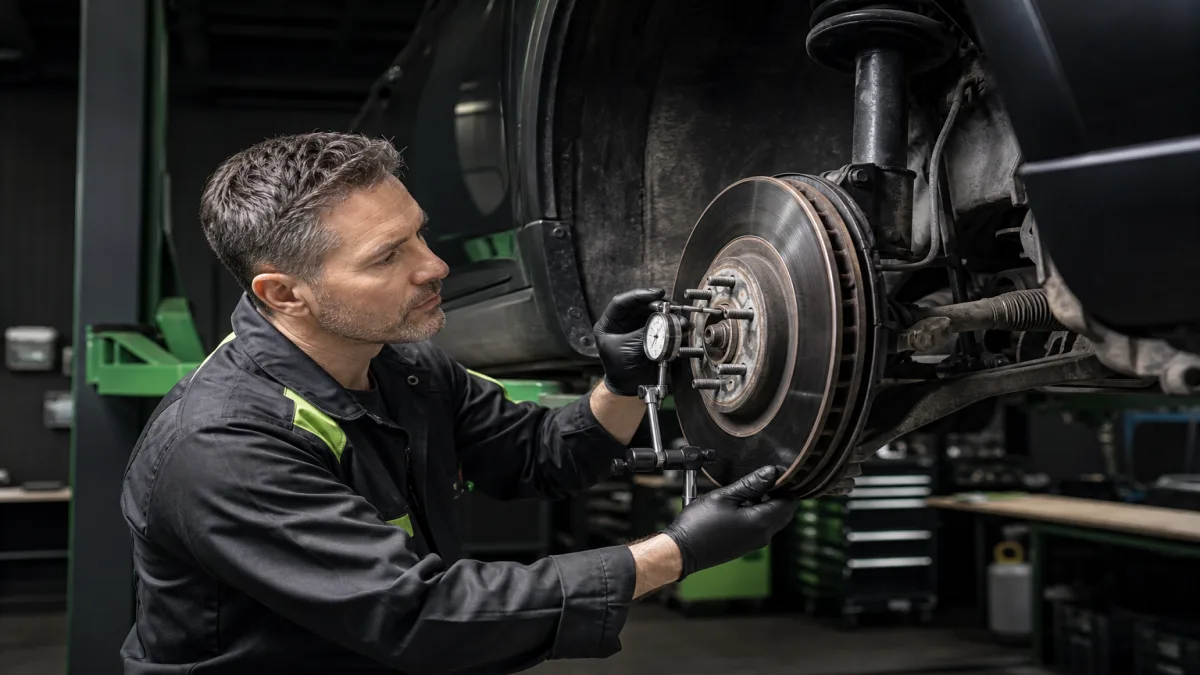
Road force variation from manufacturing can produce shake that balance weights cannot fully correct. We measure runout at the hub face and at the tire bead seat. A hub with 0.003 inches of runout can amplify a tire that passed visual inspection.
Rotating tires to different positions during diagnosis helps isolate whether a specific corner carries the fault. If vibration follows the tire, the issue is in the wheel assembly. If it stays with the corner, suspect hub, bearing, or suspension attachment.
Suspension and Steering Components
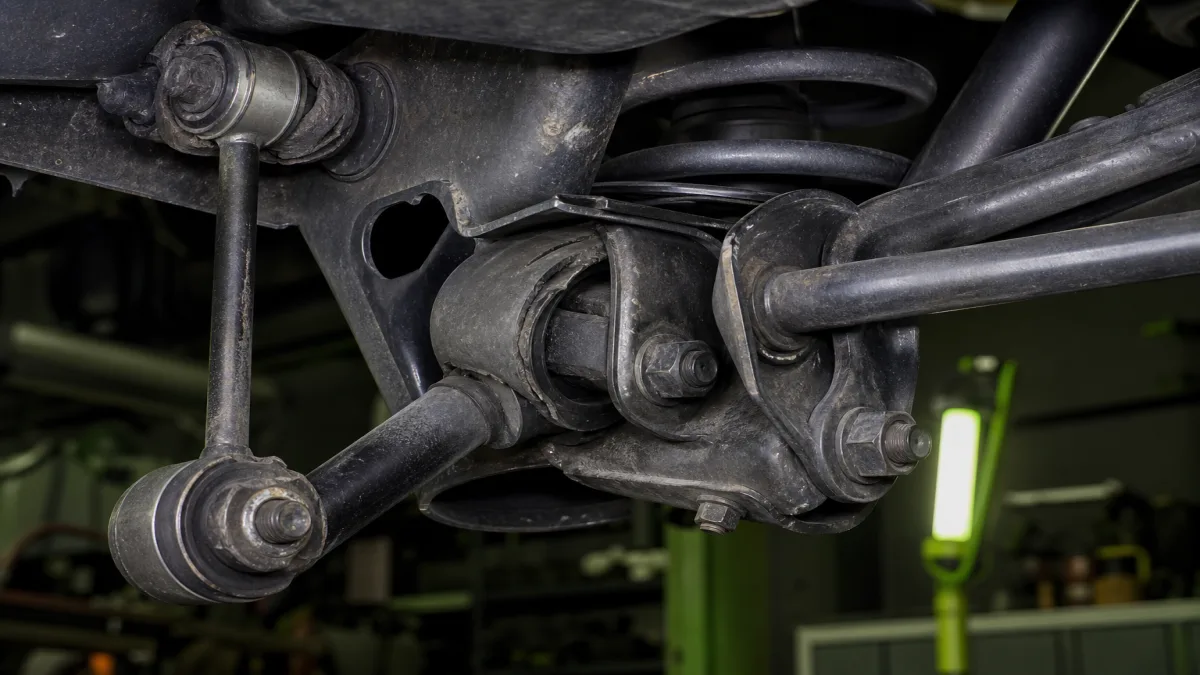
Worn stabilizer end links transmit road inputs directly to the steering rack on many platforms. Loose tie rod ends create oscillation that intensifies at highway speed. We inspect ball joints for axial play under load — static inspection alone misses loaded wear.
Strut mounts and bearing plates degrade silently until vibration appears. A binding upper mount can create a steering-column shake that mimics wheel imbalance during lane changes.
When to Escalate to Driveline Diagnosis
Rear-wheel and all-wheel-drive vehicles with vibration under load require pinion angle and U-joint inspection. Lifted or lowered vehicles may need corrected driveline geometry. We verify that previous repairs — new tires, alignment, or brake work — did not disturb torque specifications on critical fasteners.